Understanding the "why" of modern baking requires examining the historical constraints that shaped the "how". Methods that appear arbitrary today were often born of necessity, technological limitation, or geographical imperative.
4.1 Pre-Industrial Foundations
For millennia, bread making was geographically constrained. Without commercial yeast, every baker maintained a localized culture of wild yeast and bacteria. Egyptian records detail early beer and bread production as deeply intertwined processes. Roman infrastructure scaled this, utilizing massive communal ovens where citizens brought their dough to be baked.
Because stone milling retained the germ and bran, flour was highly active enzymatically and prone to rapid rancidity. Doughs were mixed, fermented for long periods, and baked dark to extract maximum nutritional value and extend shelf life.
4.2 The Industrial Shift
The 19th and 20th centuries radically altered bread production through two key innovations:
- Roller Milling: Replaced stone wheels with steel rollers, efficiently separating the white endosperm from the bran and germ. This created shelf-stable white flour, but stripped it of flavor and nutrients.
- Commercial Yeast: The isolation of fast-acting Saccharomyces cerevisiae eliminated the need for overnight sourdough fermentation. Production cycles shrank from 24 hours to 3 hours.
This culminated in methods like the Chorleywood Bread Process (CBP) in the UK, utilizing intense mechanical mixing, extra yeast, and chemical conditioners to force low-protein wheat into fluffy, structurally uniform loaves.
4.3 The Artisan Revival
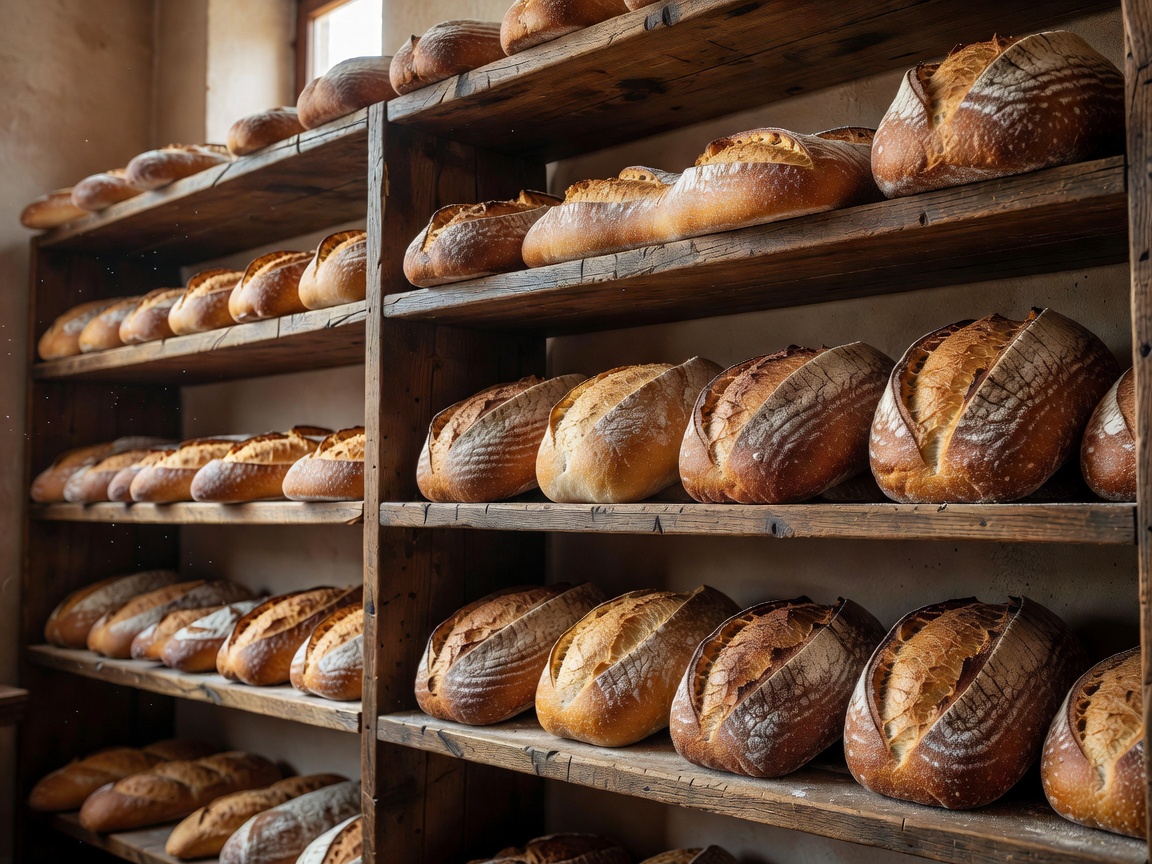
The late 20th century saw a rebellion against hyper-processed bread. In the 1970s and 80s, figures in France sought to return to pre-WWII standards. Concurrently, the revival hit San Francisco, where bakeries like Tartine Bakery (founded later by Chad Robertson) popularized high-hydration, dark-baked country loaves that became a global template.
Another landmark shift occurred in 2006 when Jim Lahey published the "No-Knead" method in the New York Times, demonstrating to the home baker that time and a Dutch Oven could replace intensive mechanical kneading, effectively democratizing artisan results.